The method
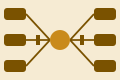
At the centre of the bow-tie is the top event: the moment control over the hazard is lost (for example a loss of containment). Threats that can lead to it are on the left; possible consequences on the right.
Preventive barriers sit between threats and the top event; mitigating barriers between the top event and consequences. Escalation factors that can defeat a barrier, and the controls that address them, complete the diagram.
Qualitative by nature, the bow-tie is above all a communication and barrier management tool: it shows everyone what must work and what must be monitored. ISO/IEC 31010 lists it among risk assessment techniques.
When to use it
- To summarise and communicate major scenarios from a PHA, HAZOP or safety report.
- To manage barriers over time: owners, testing, indicators, lessons learned.
- As a training or audit aid for risk controls.
Watch out for
- A barrier must be able to stop the scenario on its own: a general procedure or training is often only a supporting factor.
- An overloaded diagram loses its value: one bow-tie per top event.
- A bow-tie does not quantify risk; for frequency, complement it with LOPA or a fault tree.
Steps
- Choose the hazard and state the top event.
- List threats (causes) and consequences.
- Place preventive and mitigating barriers, checking they are real and independent.
- Add escalation factors and their controls.
- Assign each barrier an owner and define how its effectiveness is monitored.
Bow-tie software
List from the Aurorisk catalogue, links checked on 2026-09-26. Confirmed free access is listed first; unknown information is labelled.
| Tool | Source · licence · access | Scope | Description |
|---|---|---|---|
| Polyodos ↗ | Commercial publisherFree for teaching | International | Bow-tie alongside the other industrial methods. |
| BowTieXP (Wolters Kluwer) ↗ | Commercial publisher | International | Reference software for bow-tie diagrams. |
Standards and references
- ISO/IEC 31010 — Analyse par nœud papillon
- CCPS / Energy Institute — Bow Ties in Risk Management (2018)