The method
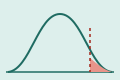
Value at Risk (VaR) answers a precise question: what is the maximum loss, over a given horizon (one day, ten days…), that will not be exceeded at a given confidence level (95%, 99%)? Three main methods exist to compute it.
The historical method replays past market moves on the current portfolio, without assuming a distribution. The parametric method assumes a distribution (often normal) for returns and computes VaR analytically, faster but less faithful to distribution tails. The Monte Carlo method simulates many scenarios from the probability distributions of risk factors, the most flexible but the most computationally expensive.
VaR says nothing about the magnitude of losses beyond the chosen threshold: stress tests and Expected Shortfall (the average loss beyond VaR) complement it for extreme scenarios. The Basel regulatory framework governs its use in banking.
When to use it
- Portfolio management: measuring and limiting market risk exposure.
- Regulatory requirements in banking and finance (capital, reporting).
- Project or credit risk: adapting the same loss-distribution logic.
Watch out for
- VaR often underestimates extreme losses (rare events, correlations that shift in crises): always complement it with stress tests.
- The choice of distribution in the parametric method strongly affects the result: justify and test it.
- A VaR computed on a calm historical period gives false security; include periods of stress in the data.
Steps
- Define the scope (portfolio, project, counterparty), the time horizon and the target confidence level.
- Choose the computation method (historical, parametric or Monte Carlo) based on available data and required precision.
- Compute VaR and compare it with the risk limits set by the organisation.
- Complement with stress tests: extreme but plausible scenarios not covered by recent history.
- Document assumptions and revalidate the model periodically.
Financial risk tools
List from the Aurorisk catalogue, links checked on 2026-09-26. Confirmed free access is listed first; unknown information is labelled.
| Tool | Source · licence · access | Scope | Description |
|---|---|---|---|
| Open Source Risk Engine (ORE) ↗ | Open sourceFree | International | Open-source market and credit risk engine. |
| QuantLib ↗ | Open sourceFree | International | Quantitative finance library. |
| RiskyProject (Intaver) ↗ | Commercial publisher | International | Project risk: cost and schedule via Monte Carlo. |
Standards and references
- Comité de Bâle sur le contrôle bancaire — Bâle III
- ISO 31000 — Management du risque